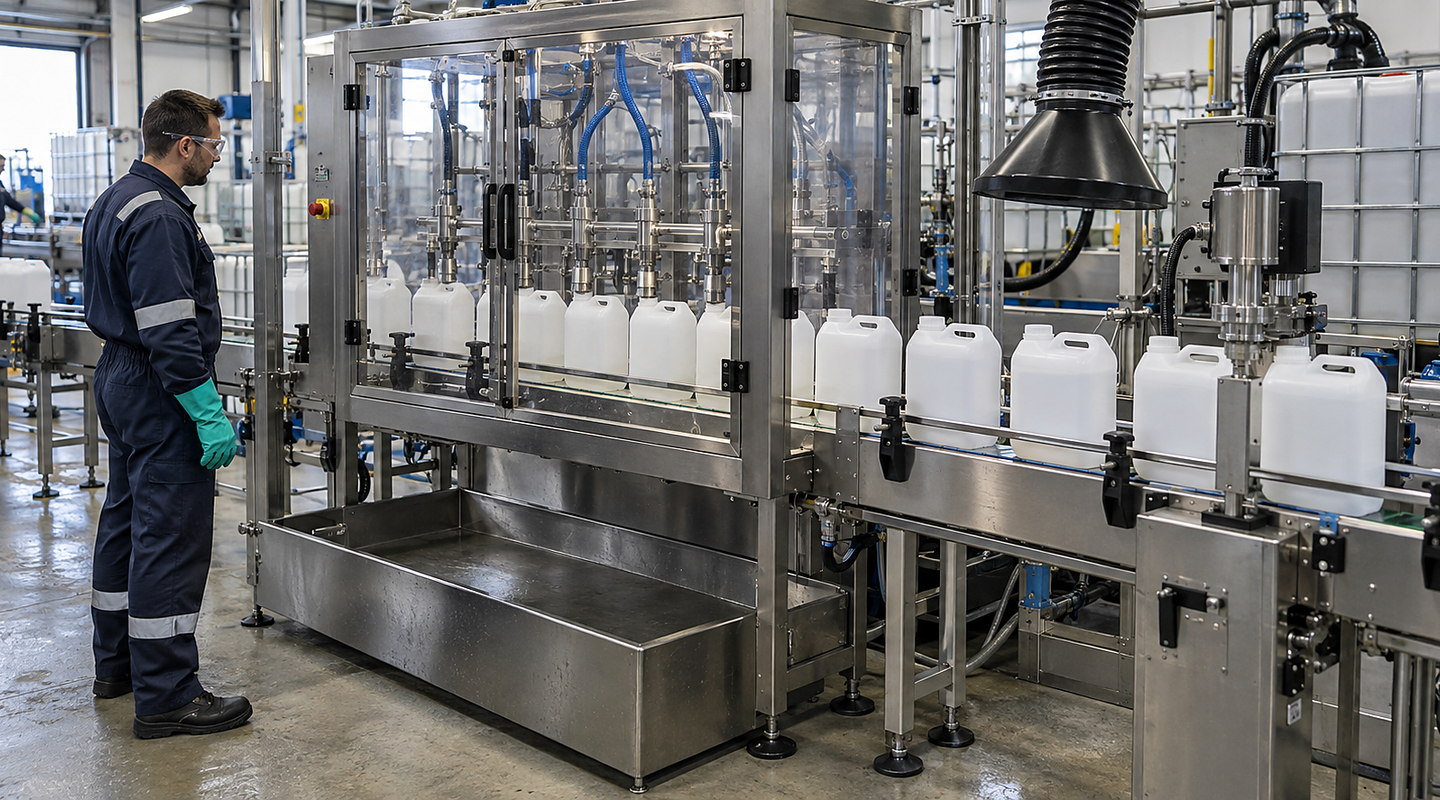
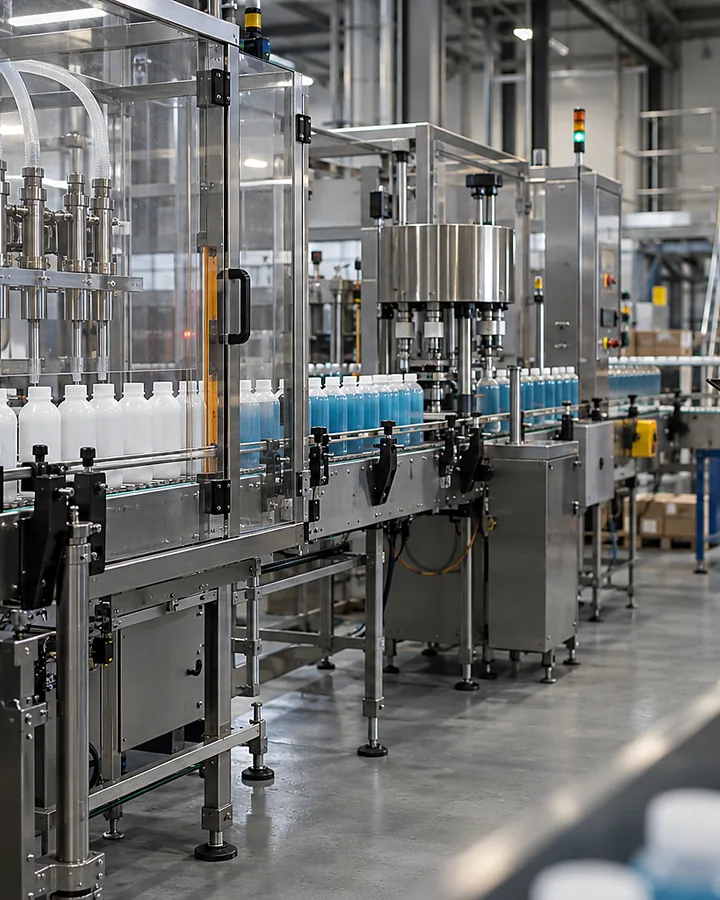
Define the liquid, drum range and target fill before comparing a drum filling system. Review the production pattern, product supply, handling and cleaning, with representative packs and clear checks for acceptable completed fills.
Speak directly with Lancing about drum filling and bulk-liquid handling.
Quick answer
How do we specify a drum filling system for our product and site?
Provide product data, the drum size range, opening positions and target fill quantities. Describe how drums arrive, are located, filled and closed, including pallet handling if required. Assess the proposed dosing method, spill management, cleaning and finished-weight checks using the intended containers and production conditions.
Application decisions
Specify where the drum sits, how it fills and how it leaves
A drum-filling cycle includes positioning and closure as well as dosing. Review whether drums arrive individually or on pallets, how openings are located and how the completed load will be transferred without disrupting the filling position.
Locate the opening reliably
Provide drum drawings and samples showing bung position, neck dimensions, height and normal variation. Include the way drums are oriented on arrival. Confirm how the nozzle is aligned and how a misplaced or absent drum prevents a normal filling cycle from starting.
Define the quantity and tare basis
State whether acceptance is by net mass or another specified quantity. For weighing, describe empty-drum and pallet handling and how tare is established. Keep the acceptance measurement separate from a nominal drum capacity, which does not describe the quantity actually delivered.
Review product supply at the drum
Identify supply vessel, transfer distance, pressure variation, product temperature and possible foam. The final cut-off must be trialled with the product-feed arrangement represented. Include what happens when supply runs low, is replenished or pauses during a partly completed fill.
Agree lance and withdrawal behaviour
Trial the proposed discharge position and withdrawal sequence through the actual opening. Observe splash, foam, drip and the condition around the bung. Product compatibility and any hazardous-area duties require the application-specific assessment already identified in the brief.
Include closing and full-drum movement
Show the closing operation, tools or equipment, inspection position and route to storage. Record who moves drums and pallets and where partly filled or rejected containers are held. A suitable filler still needs a workable site arrangement for these tasks.
Plan cleaning and product changes
Map the wetted path from supply connection through the nozzle, including residual product and drains. Identify which product changes require different cleaning or parts. Include cleaning access and the method for confirming readiness before the next drum product is introduced.
Carry the application decisions into a documented review and an agreed test or inspection plan.
01
Map drum and product variants
Record openings, quantities, supply conditions and arrival method.
02
Trial the complete fill
Assess quantity, foam, cut-off and withdrawal with representative drums.
03
Include supply and handling pauses
Challenge interrupted fills and full-drum removal in the proposed layout.
04
Agree release checks
Document quantity checks, closure checks, cleaning and suspect-drum handling.
Important limits
Know what needs a separate check
The selected method must be trialled with representative product and packaging.
Supplier tolerances and product-condition changes can alter handling or fill behaviour.
Equipment selection does not replace product, hygiene, packaging or regulatory validation.
Your final solution for drum filling and bulk-liquid handling must reflect the law, current standards and site-specific risks that apply to your installation.