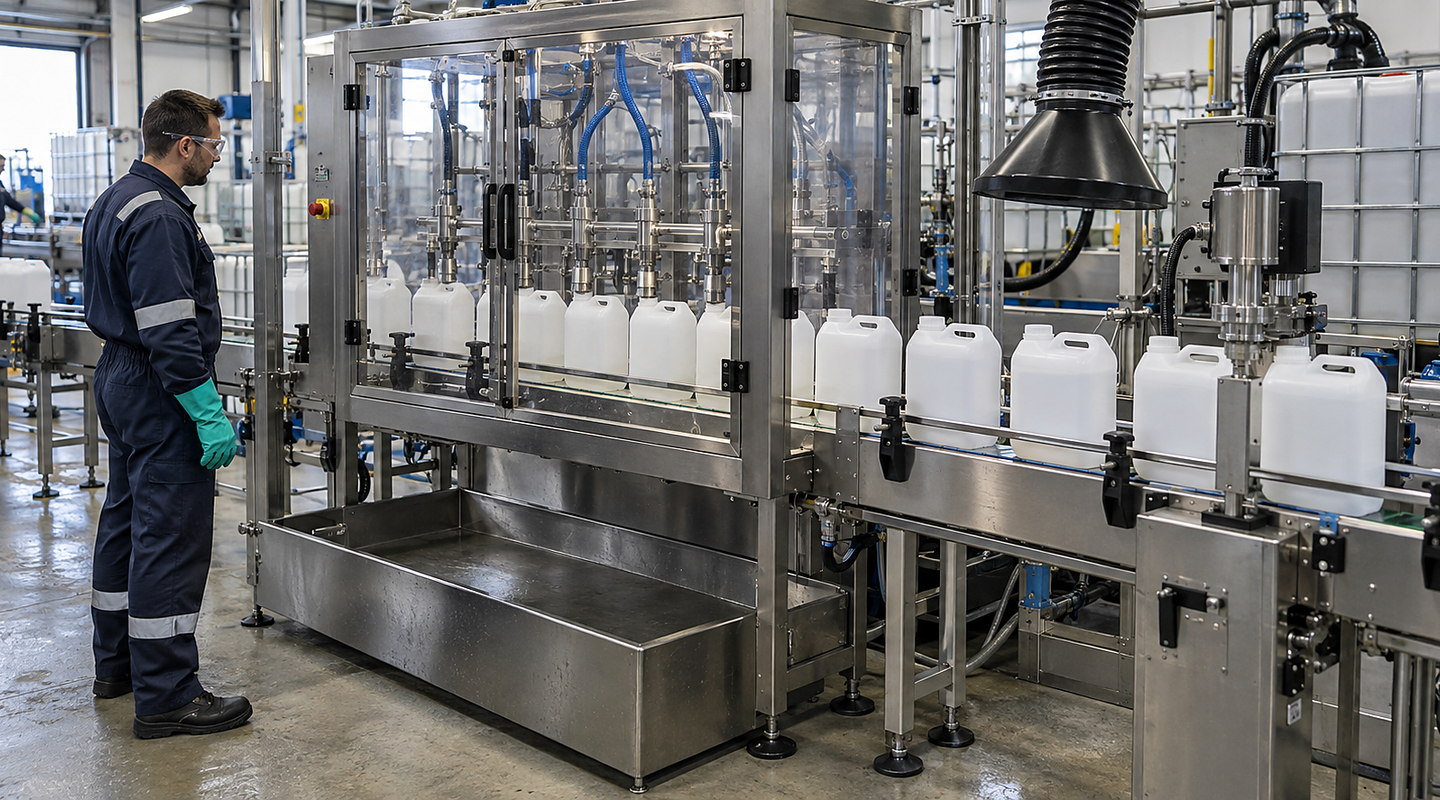
Liquid Properties and Feed Conditions: Drum filling trials
Plan drum filling trials around product data, feed variation, foam, nozzle cut-off, withdrawal and cleaning; agree quantity and completed-drum checks.
In brief
Record the liquid data, filling temperature, supply vessel, transfer distance and pressure variation. Trial foam, splash, nozzle cut-off and lance withdrawal with the intended drums, then agree quantity checks, cleaning and acceptance limits.
For routine production using drum filling and bulk-liquid handling, describe the realistic range and how changes in liquid properties and feed conditions affect the result you need.
On the production floor
Turn your production information into clearer decisions — Drum Filling Systems
Plan drum filling systems around your product, pack range, target output, cleaning needs and finished-pack checks. Discuss a practical line concept with Lancing using representative samples. Use this guide to resolve liquid properties and feed conditions before it limits the final system.
Liquid Properties and Feed Conditions: condition, range and effect on your process
Current condition
Describe how you observe or measure liquid properties and feed conditions in your operation, including sample condition and any measuring limits. For a project focused on drum filling and bulk-liquid handling, also record the production state in which each observation was made.
Realistic range
For Drum Filling Systems, include normal production conditions, credible extremes, product or part variants and changes over time.
Effect on the system
Show which settings, safeguards, maintenance tasks, decisions or required outcomes are affected by changes in liquid properties and feed conditions.
Before you contact us
Five questions about liquid properties and feed conditions for your application
Who can confirm this information?Identify the person responsible for liquid properties and feed conditions in production, quality, engineering or operations.
How representative is the sample?Include age, supplier, batch, environment and upstream process state where they affect drum filling systems.
What is the difficult condition?Include credible feed-pressure and temperature variations, foam, interrupted fills, drips and product changes; identify which conditions need a representative trial.
How will you judge the result?Agree the method, repetitions, acceptable range, result record and the response if the observed result falls outside the agreed range.
What else must be coordinated?Your final drum filling systems scope must also account for cleaning, access and changeover method, completed-fill checks and suspect-drum handling, current regulations and the conditions at your site.
Connected details
Review liquid properties and feed conditions as part of the complete system
Question 1
Liquid Properties and Feed Conditions
Record the liquid data and filling temperature used in each trial, together with supply vessel, transfer distance and pressure variation. Include foam, splash and cut-off observations so results can be compared under the same feed conditions.
Question 2
Drum Sizes, Openings and Handling
Supply drawings and samples of the intended drums, including opening size and position, height variation and arrival orientation. Record how the nozzle is aligned and how each filled drum is closed and moved.
Question 3
Target Fill Quantity and Tare Basis
State the target fill quantity and tare basis, then agree how completed fills will be measured and recorded. Keep those agreed settings and limits with the trial results.
Question 4
Required Output and Production Pattern
Record the required output and production pattern used in the trial, including stops, interrupted fills and product changes. Compare results across the realistic feed and temperature range rather than one steady nominal condition.
Question 5
Cleaning, Access and Changeover Method
Record the agreed cleaning and product-change method, access needed around the lance and the conditions for restarting. Include any feed or settings changes that form part of the trial.
Question 6
Completed-Fill Checks and Suspect-Drum Handling
Record each completed-fill result alongside feed conditions and any foam, drips or interrupted-fill observations. Agree how partly filled or suspect drums will be identified and handled before normal production resumes.