Liquid Properties and Feed Conditions
Describe the sequence of liquids and the feed conditions for each. Include temperature, pressure variation, foam and interruptions, and identify product changes that need a representative trial.
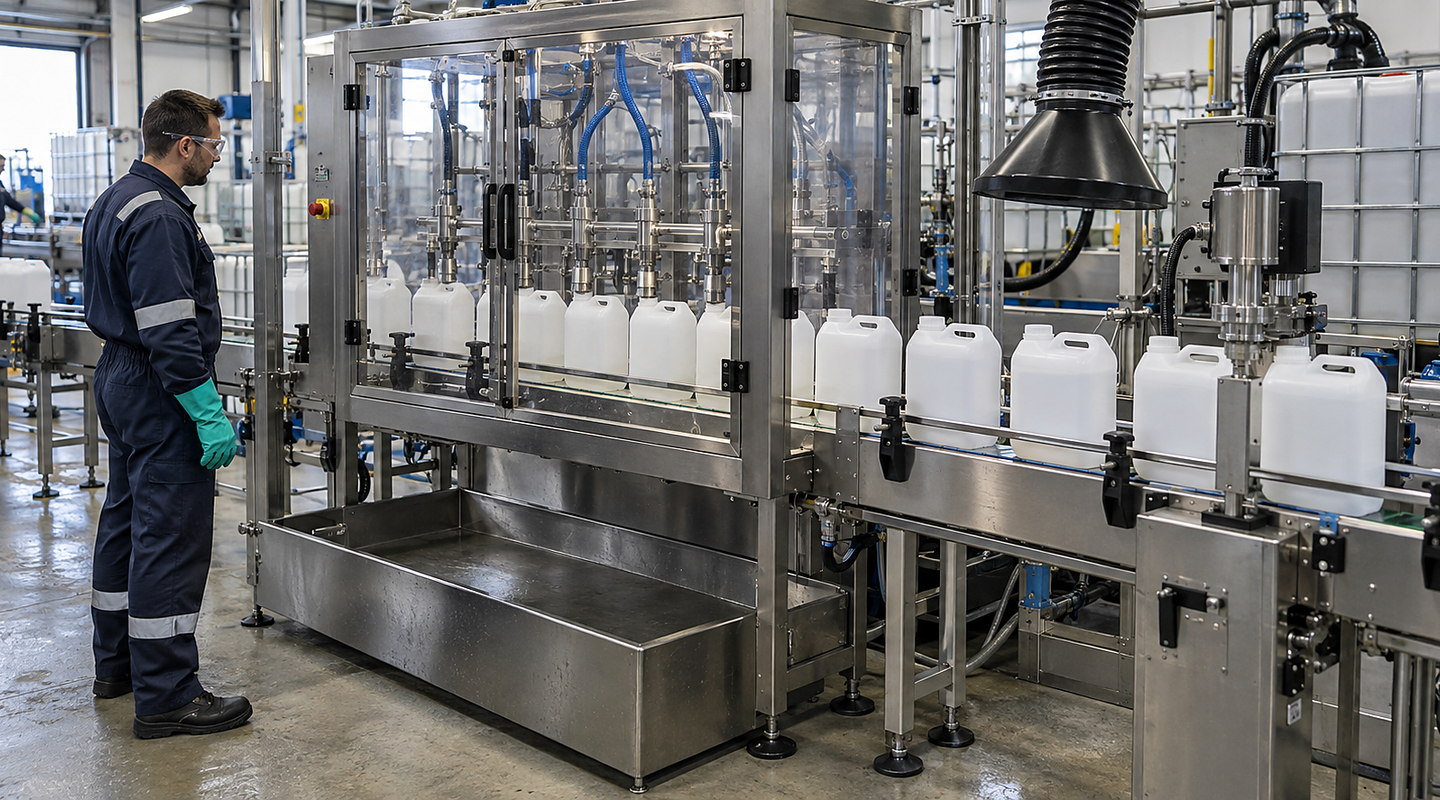
Plan short runs and format changes involving drum filling and bulk-liquid handling around representative products, packs and packaging materials, line connections, operating limits, acceptance checks and next steps.
For short drum-filling runs, compare the liquids and drum formats that change, the target quantities and tare basis, and the time needed for cleaning and first-fill checks. Assess the complete changeover and handling cycle before choosing the level of automation.
Plan drum filling systems around your product, pack range, target output, cleaning needs and finished-pack checks. Discuss a practical line concept with Lancing using representative samples.
Plan drum filling systems around your product, pack range, target output, cleaning needs and finished-pack checks. Discuss a practical line concept with Lancing using representative samples. For short runs and format changes involving drum filling and bulk-liquid handling, the deciding details include liquid properties and feed conditions, target fill quantity and tare basis and completed-fill checks and suspect-drum handling.
Discuss your application

Describe the sequence of liquids and the feed conditions for each. Include temperature, pressure variation, foam and interruptions, and identify product changes that need a representative trial.
List the drum formats and opening positions used in each run. Provide drawings showing bung and neck dimensions and explain which locating, handling or nozzle-alignment arrangements change.
Record the target quantity and tare basis for every product and drum format. Agree how a changed setting or empty-drum condition is confirmed before the first completed fill is accepted.
State typical batch sizes and changeover frequency as well as the required output. Include cleaning, product replenishment, first-fill checks and full-drum transfer in the time available for each run.
Identify the previous and next products, residual-liquid and drain points, cleaning access and any parts that change. Agree how readiness for the next product will be checked rather than assuming every changeover is equivalent.
Define the first-fill quantity and closure checks after a change, how results are recorded and how a suspect drum is handled. Include interrupted-fill and restart conditions in the agreed trial.
Include replenishment, normal production, planned change, short stops, fault recovery, cleaning and maintenance for short runs and format changes involving drum filling and bulk-liquid handling. A fast automatic step can still leave your team with a slow or awkward overall process.
Run the agreed product or part mix for short runs and format changes involving drum filling and bulk-liquid handling at your intended operating pattern.
Include credible extremes for liquid properties and feed conditions and drum sizes, openings and handling.
Show how the proposed solution detects a problem affecting short runs and format changes involving drum filling and bulk-liquid handling, responds safely, informs your team and restarts under control.
Compare with Routine Production Using Drum Filling and Bulk-Liquid Handling if that operating pattern is closer to your application.